Music Chord Progressions
The Building Blocks of Songs
What ARE music chord progressions? As the name implies, chord-progressions are sequences of chords which are played in a particular order. A simple example is the song "Louie Louie"--the chord progression is (in the key of G): G/ C / D / C /.
You have learned in the lessons on Major and Minor chords that there are twelve of each. If you make different combinations of those twenty-four chords, you can write songs. The trick is to know which chords "go together".
There are seven notes in a major scale. For each of these seven notes, there is a chord with the same name. These are the seven chords which make up any key. These seven chord occur in a specific pattern of Major and Minor.
| Key of C major | Key of D major | |
| I Major | C | D |
| ii Minor | D minor | E minor |
| iii Minor | E minor | F# minor |
| IV Major | F | G |
| V Dominant 7 | G7 | A7 |
| vi Minor | A minor | B minor |
| vii Diminished 7 | Bo7 | C#o7 |
This table is the MAGIC FORMULA!
The left-hand column indicates the chord "qualities" (major, minor, etc). This means that in any given "key" (for this purpose, "key" and "scale" mean the same thing),
the chordnamed after the FIRST note in the scale is MAJOR. The chord
named after the SECOND note in the scale is MINOR, and so on.
The other two columns are examples in the keys of C and D major. Notice that the chord qualities are the same in both keys. The difference is that the key of D incorporates the key signature for the D major scales (F# and C#).
|
|
Special Note to Guitar Players: Don't Miss This Opportunity!
Are you ready to take your guitar playing to the next level? My friend, Alex Cortes has just released his new course, "Fretboard Essentials".
Get ready for some simple fretboard secrets that will knock you over. I highly recommend that you Visit Fretboard Essentials and give yourself the gift of EXTRAORDINARY guitar playing!
Chord progressions are named by their "number names". A very common chord progression in the 1950's was:
I / vi / ii / V
If we plug into this progression chords from the key of "C", it becomes:
C / Am / Dm / G
See how it works? If you want to get good at this, write this progression in all twelve keys and play the chord-progressions. Then listen carefully to your favorite music and see if you can recognize it. I guarantee that it is there!
(hint: "Jesus of Suburbia").
When you have mastered this progression, here are some more for you:
I / V / ii / IV
I / IV /I / V/ I
After that, try writing your own. One thing to remember is that the V chord wants to go to the I chord.(It is probably best at this point to leave the vii diminished 7th chord for later--we will get to it in another lesson.)
Follow Us



Try Our Drum Tabs The Best on the Web!
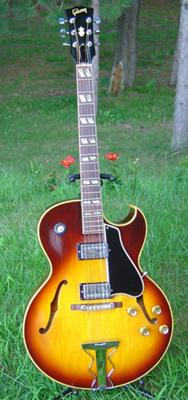
How Much is Your Guitar Worth?

Frustrated? Get Free Songwriting Lessons
Absolutely Free Music Lessons!
Subscribe and receive FREE "Harmonizing the Minor Scales", a 12-page E-course
New! Comments
We welcome your comments and ideas! Leave a comment in the box below.